On 12 Sep, 2010 With
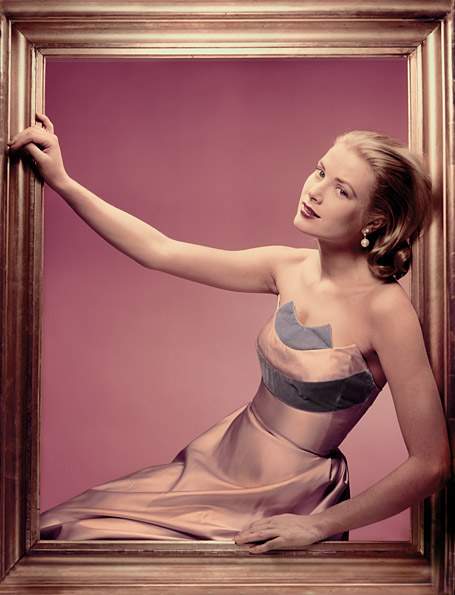
by Lottie Johansson If you are visiting a major city and in need of a shot of culture, instead of an art show you might choose to see a fashion exhibition such as Grace Kelly: Style Icon, newly opened at the Victoria & Albert Museum in London. You would not be alone: the number of people attending fashion exhibitions at art galleries and fashion institutions around the world has increased considerably over the past few years. And we are not just talking fashion insiders here; these shows attract a wide demographic audience. With recent inspiring and diverse shows such as The Golden Age of Couture at the V&A, Superheroes: Fashion & Fantasy at the Metropolitan Museum of Modern Art in…
Read More
On 11 Sep, 2010 With
Stuckism is an international art movement that was founded in 1999 by Billy Childish and Charles Thomson to promote figurative painting in opposition to conceptual art. The first group of thirteen British artists has since expanded, as of May 2010, to 209 groups in 48 countries. The Stuckists have staged shows and gained media attention for outspoken comments and demonstrations, particularly outside Tate Britainagainst the Turner Prize, sometimes dressed in clown costumes. They have also stated their opposition to the Charles Saatchi-patronisedYoung British Artists. After exhibiting mainly in small galleries in Shoreditch, London, they were given their first show in a major public museum in 2004, the Walker Art Gallery, as part of the Liverpool Biennial. Other campaigns mounted by the group include official avenues, such as standing in the 2001 general election,…
Read More
On 10 Sep, 2010 With
Scientific examination of The Madonna with the Iris was able to clarify, to some degree, the complex genesis of this work. Careful study of the infrared reflectogram revealed many changes made at different stages in the working process, and suggested that more than one hand might have been involved in the painting’s execution. Analysis of paint cross-sections showed that some finishing touches were added after varnish had been applied to the otherwise completed painting. A troubling attribution In 1945, National Gallery trustees approved the proposed purchase of ‘The Madonna with the Iris’. However, the painting’s problematic attribution engendered caution, and minutes of the Board Meeting for 3 May 1945 record: ‘… the Board must not purchase it as an authentic…
Read More
On 9 Sep, 2010 With
‘I mean by a picture, a beautiful romantic dream of something that never was, never will be, in a light better than any light that ever shone, in a land no one can define or remember — only desire.” Sir Edward Burne-Jones’ home – The Grange “Nothing (with one small but important exception) remains of The Grange, where the Burne·Jones family lived for more than thirty years. It was in North End, Fulham, and consisted, from the eighteenth century on, of two red brick houses, standing back a little from the road, with iron gates and a short flagged path. Samuel Richardson had lived there from 1738 to 1754, (when his rent was put up to £40 p.a.), but there…
Read More
On 9 Sep, 2010 With
For many years The Virgin and Child with an Angel was prized as Francesco Francia’s earliest known dated painting (faintly signed and dated 1490) and for representing, in the chalice held by the angel, the only known example of the type of object Francia may have produced during his presumed earlier career as a goldsmith. But in 1954 an apparently identical version surfaced in a London auction. A thorough investigation of both paintings was undertaken to determine which was Francia’s original. Side-by-side investigation In 1955 examination of the National Gallery painting found the wood panel,ground and paint layers to be reasonably consistent with 15th-century practice, although it was noted that the gessoground was a remarkably bright white. The imprimatura was a pinkish-brown. Although most unusual…
Read More
On 8 Sep, 2010 With
In the 19th century the painting of Venus with three putti was thought to be by Sandro Botticelli. It was acquired by the Gallery with Botticelli’s famous Venus and Mars, although more was paid for the former work despite the fact that it is today the less well-known of the two pictures. The attribution of the painting now laconically entitled An Allegory has been downgraded, but this does not call into question its authenticity, however awkward and eccentric its design. Two Botticellis? In 1874 the sale of the collection of Alexander Barker, the son of a fashionable bootmaker, was eagerly watched in London. Even the Prime Minister, Benjamin Disraeli, wrote to Lady Bradford that he meant “to rise early tomorrow…
Read More
On 7 Sep, 2010 With
When this painting first appeared around 1930, it was praised as a work byBotticelli. Not long afterwards, however, the investigations of art historians and scientists revealed it to be an outright fake, made with the intention to deceive. Acquisition The noted art collector Lord Lee of Fareham bought the Madonna of the Veil in 1930 from an Italian dealer for the sum of $25,000. He subsequently bequeathed it to The Courtauld Gallery, London in 1947. Despite a lack of information about its origins, the picture was universally hailed by connoisseurs and academics as a masterpiece by Botticelli when it first arrived in London in the early 1930s. The directors of the Medici Society published the painting as a ‘superb composition of the greatest of…
Read More
On 6 Sep, 2010 With
Photorealism Photorealism is the genre of painting based on using the camera and photographs to gather information and then from this information, creating a painting that appears to be very realistic like a photograph. The term is primarily applied to paintings from the United States art movement that began in the late 1960s and early 1970s. History Origins As a full-fledged art movement, Photorealism evolved from Pop Art and as a counter to Abstract Expressionism as well as Minimalist art movements in the late 1960s and early 1970s in the United States. Photorealists use a photograph or several photographs to gather the information to create their paintings and it can be argued that the use of a camera and photographs is an acceptance of Modernism….
Read More
On 5 Sep, 2010 With
Maximalism Maximalism is a term used in the arts, including literature, visual art, music, and multimedia. It is used to explain a movement or trend by encompassing all factors under a multi-purpose umbrella term like expressionism. The term maximalism is sometimes associated with post-modern novels, such as by David Foster Wallace and Thomas Pynchon, where digression, reference, and elaboration of detail occupy a great fraction of the text. This sort of literature is also frequently described as hysterical realism, a term coined by James Wood, who argues that it is a genre similar to magical realism. Novelist John Barth defines literary maximalism through the medieval Roman Catholic Church’s opposition between, “two…roads to grace:” the via negativa of the monk?s cell and the hermit?s cave, and the via affirmativa of immersion in human…
Read More
On 4 Sep, 2010 With
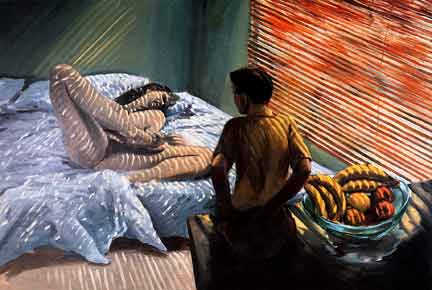
New European Painting emerged in the 1980s and has clearly reached a critical point of major distinction and influence in the 1990s with painters like Gerhard Richter andBracha Ettinger whose paintings have established and continue to create a new dialogue between the historical archive, American Abstraction and figurality, followed by painters like Luc Tuymans, Marlene Dumas and others. A third wave came with artists like Neo Rauch, Michaël Borremans and Chris Ofili. Bad boy, oil on linen, 66 inches x 96 inches by Eric Fischl Neo-expressionism and other related movements in painting have emerged in the final two decades of the 20th century in Europe and in the United States, but this New Painting is not expressionist. Rather it is a renovative kind of abstraction and…
Read More