On 28 Aug, 2015 With
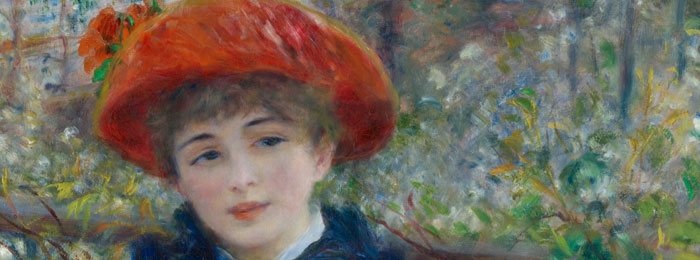
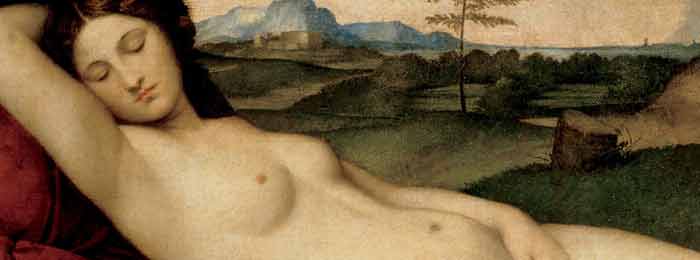
Renoir’s Palette Pierre-Auguste Renoir was a French artist who was a leading painter in the development of the Impressionist style. As a celebrator of beauty, and especially feminine sensuality, it has been said that “Renoir is the final representative of a tradition which runs directly from Rubens to Watteau.” Renoir’s paintings are notable for their vibrant light and saturated color, most often focusing on people in intimate and candid compositions. The female nude was one of his primary subjects. In characteristic Impressionist style, Renoir suggested the details of a scene through freely brushed touches of color, so that his figures softly fuse with one another and their surroundings. One of the best known Impressionist works is Renoir’s 1876 Dance at Le…
Read More
On 23 Aug, 2015 With
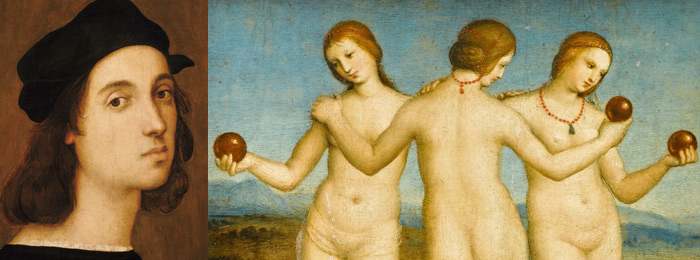
How to paint in style of Raphael The Three Graces is an oil painting by Italian painter Raphael, housed in the Musée Condé of Chantilly, France. The date of origin has not been positively determined, though it seems to have been painted at some point after his arrival to study with Pietro Perugino in about 1500, possibly 1503-1505. According to James Patrick in 2007’s Renaissance and Reformation, the painting represents the first time that Raphael had depicted the nude female form in front and back views. The Three Graces is an oil painting by Italian painter Raphael. The date of origin has not been positively determined, though it seems to have been painted at some point after his arrival to…
Read More
On 23 Aug, 2015 With
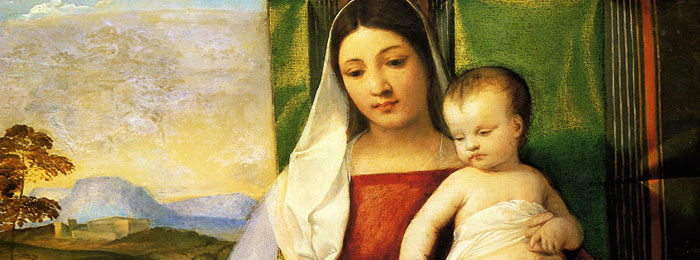
Oil painting techniques:Titian’s Palette Titian, the greatest Italian Renaissance painter of the Venetian school. He was recognized early in his own lifetime as a supremely great painter, and his reputation has in the intervening centuries never suffered a decline. Titian was one of the most versatile of Italian painters, equally adept with portraits, landscape backgrounds, and mythological and religious subjects. His painting methods, particularly in the application and use of color, would exercise a profound influence not only on painters of the Italian Renaissance, but on future generations of Western art. In 1590 the art theorist Giovanni Lomazzo declared him “the sun amidst small stars not only among the Italians but all the painters of the world.” During the course…
Read More
On 18 Aug, 2015 With
Venetian Painting Techniques The painting techniques employed by Northern Renaissance artists strongly influenced the work of renowned painters, such as Titian and Giorgione, during the Italian Renaissance. Venetian artists also greatly impacted the styles of this period, notably the Van Eyck brothers. The oil painting techniques developed by these Flemish painters around the year 1400 combined the use of egg tempera and oil painting, with the underpainting being created using a grisaille technique of tempera, while pure colored oil glazes were carefully applied on top. This combination painting technique added remarkable lustre to their small panel paintings, resulting in striking jewel-tones, the most vivid hallmark of the brothers’ famous style. Prior to the Van Eyck brothers’ success with their combination…
Read More
On 16 Aug, 2015 With
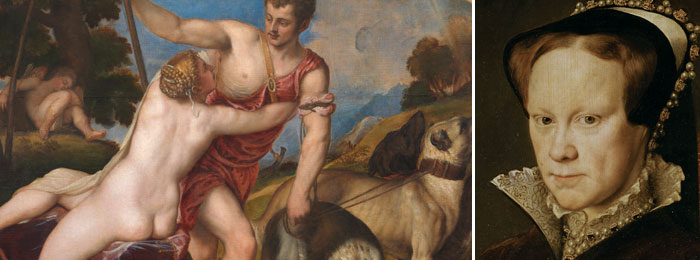
ELEGANT ANECDOTES about TITIAN AND PHILIP II Titian was not less esteemed by Philip II., than by his father, Charles V. When Philip married Mary, Queen of England, he presented him his famous picture of Venus and Adonis, with the following letter of congratulation, which may be found in Ticozzi’s Life of Titian: “To Philip, King of England, greeting: “Most sacred Majesty! I congratulate your Majesty on the kingdom which God has granted to you; and I accompany my congratulations with the picture of Venus and Adonis, which I hope will be looked upon by you with the favorable eye you are accustomed to cast upon the works of your servant “Titian.” According to Palomino, Philip was sitting on his…
Read More
On 13 Aug, 2015 With
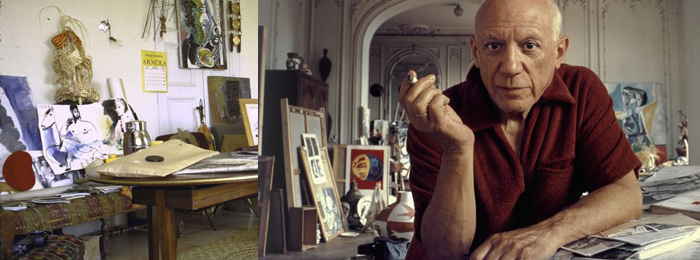
Pablo Picasso was a Spanish painter, sculptor, printmaker, ceramicist, stage designer, poet and playwright who spent most of his adult life in France. As one of the greatest and most influential artists of the 20th century, he is known for co-founding the Cubist movement, the invention of constructed sculpture, the co-invention of collage, and for the wide variety of styles that he helped develop and explore. Exceptionally prolific throughout the course of his long life, Picasso achieved universal renown and immense fortune for his revolutionary artistic accomplishments, and became one of the best-known figures in 20th-century art. At the tender young age of 9, Picasso completed his first painting: Le picador, a man riding a horse in a bullfight. His…
Read More
On 11 Aug, 2015 With
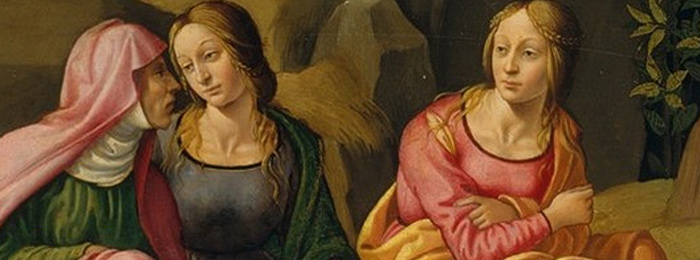
Rediscovered painting of Michelangelo by Milton Esterow A painting in the Metropolitan long attributed to the circle of Francesco Granacci is really by Michelangelo— according to experts who cite underdrawings, imagery, and aspects of the artist’s own biography as clues. “I’m acutely aware that Michelangelo, like van Gogh, attracts a lot of crazy ideas, and people are going to say, ‘This is another absurd idea,’” said Everett Fahy, one of the world’s most distinguished scholars of the Italian Renaissance, who retired in March as John Pope-Hennessy Chairman of European Paintings at the Metropolitan Museum of Art. “I’m expecting that they’re going to throw brickbats.” The brickbats may come from scholars who disagree with Fahy when he asserts that Saint John…
Read More
On 9 Aug, 2015 With
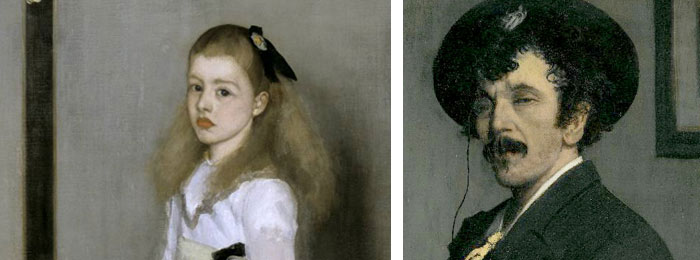
Whistler’s Oil Painting Technique Whistler’s approach to portraiture in his late maturity was described by one of his sitters, Arthur J. Eddy, who posed for the artist in 1894: “He worked with great rapidity and long hours, but he used his colours thin and covered the canvas with innumerable coats of paint. The colours increased in depth and intensity as the work progressed. At first the entire figure was painted in greyish-brown tones, with very little flesh colour, the whole blending perfectly with the greyish-brown of the prepared canvas; then the entire background would be intensified a little; then the figure made a little stronger; then the background, and so on from day to day and week to week, and…
Read More
On 8 Aug, 2015 With
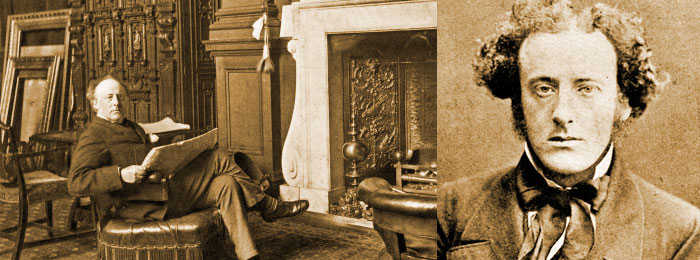
Sir John Everett Millais was an English painter and illustrator and one of the founders of the Pre-Raphaelite Brotherhood. Millais’ Christ In The House Of His Parents was highly controversial because of its realistic portrayal of a working class Holy Family labouring in a messy carpentry workshop. All early works were painted with great attention to detail, often concentrating on the beauty and complexity of the natural world. In paintings such as Ophelia Millais created dense and elaborate pictorial surfaces based on the integration of naturalistic elements. This approach has been described as a kind of “pictorial eco-system”. This style was promoted by the critic John Ruskin, who had defended the Pre-Raphaelites against their critics. Millais’ friendship with Ruskin introduced him to Ruskin’s wife Effie. Soon after they met she modelled for…
Read More
On 5 Aug, 2015 With
Italian Renaissance portrait was unmask as a remarkably sophisticated 20th-century forgery. Sometimes we see what we want to see. When this Italian ‘Renaissance’ portrait was acquired by the National Gallery in 1923, it was hailed as a unique painting by an undiscovered master of the 15th century. Since the 1950s, connoisseurship, art historical research and scientific analysis have combined forces to unmask a remarkably sophisticated 20th-century forgery. This portrait was acquired by the National Gallery in 1923 as a painting of the late 15th century, possibly by an accomplished but unknown artist in the circle of Melozzo da Forli (1438?1494), an artist primarily active in Urbino and Rome. The armorial badge stamped into the gesso at upper right suggested the…
Read More