On 30 Jun, 2015 With
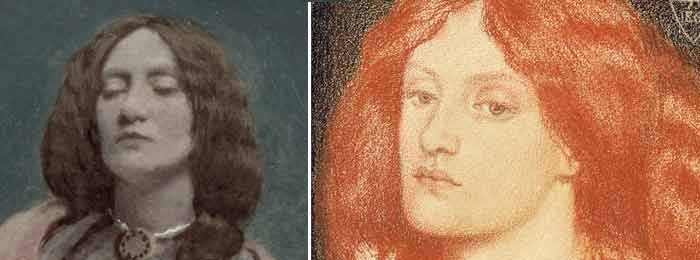
Rossetti did not have the natural technical talent that is seen in the small detail and brilliant color of a typical Pre-Raphaelite painting, and his early oil paintings, the Girlhood of Mary Virgin (1849) and the Ecce Ancilla Domini (1850), were produced only at the expense of great technical effort. In the less demanding technique of watercolor, however, Rossetti clearly revealed his imaginative power. The series of small watercolors of the 1850s produced such masterpieces as Dante’s Dream (1856) and the Wedding of St. George and the Princess Sabra (1857). In almost all of Rossetti’s paintings of the 1850s he used Elizabeth Siddal as his model. Discovered in a hat shop in 1850, she was adopted by the Brotherhood as their ideal of feminine beauty. In 1852 she…
Read More
On 30 Jun, 2015 With
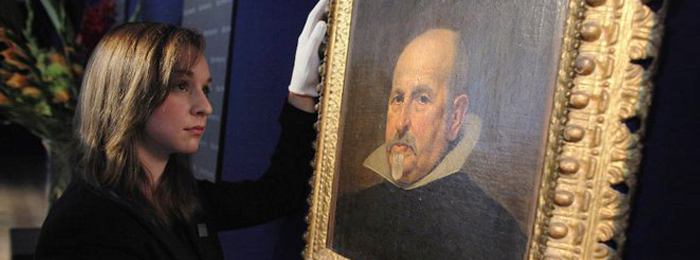
Newly-discovered Velazquez portrait A Trinity College Dublin lecturer has discovered a previously unknown painting by the artist Diego Velazquez. The 300-year-old portrait of a man was thought to belong to a minor 19th century British artist until Dr Peter Cherry identified it as the work of the Spanish master. Velazquez is regarded as one of the greatest painters of all time. There are only 100 known paintings by him worldwide. The painting was offered for sale among other more ordinary works at an auction in Oxford. But the auction house contacted Dr Cherry of Trinity’s Department of Art and Architecture after some details in the painting aroused interest. A former student of Dr Cherry’s worked at the auction house, Bonhams….
Read More
On 28 Jun, 2015 With
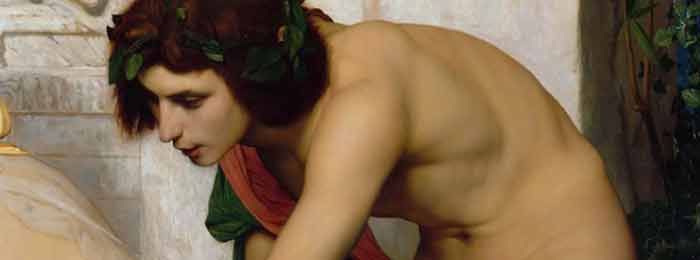
Clothed female, naked male in Art Clothed female, naked (or nude) male is a genre of erotica featuring one or more nude men and one or more clothed women. In classical antiquity, the portrayal of nude male form in art (including the exposure of genitals) was considered to be more acceptable than that of the naked female form. This can be seen in the comparative portrayal of the classical theme of Perseus and Andromeda. In a wall painting of ancient Pompeii, Perseus is nude while Andromeda is fully clothed. By the renaissance, this view had reversed. For example, in Titian’s treatment of Perseus and Andromeda in mid-1550s, however, it is Andromeda who is nude – save for the barest wisp of fabric – while Perseus is clothed in armour. Depictions of…
Read More
On 27 Jun, 2015 With
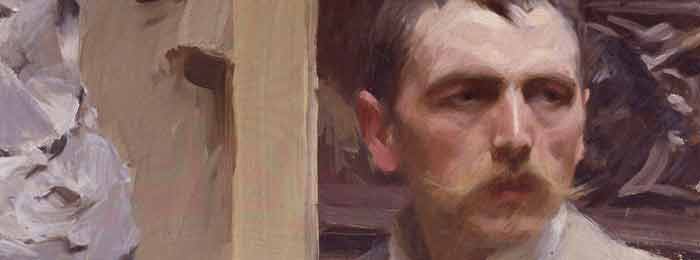
Palettes of Famous Artists. Zorn Palette Swedish painter Anders Zorn (1860-1920) has long been associated with a limited palette of four colors. Rosemary Hoffman, in the book Northern Light: Nordic Art at the Turn of the Century wrote, “Zorn was noted for executing paintings using a sober color scale limited to white, ochre, vermilion, and ivory black.” Hans Henrik Brummer, writing in the 1986 catalog on Zorn, said “basically his register was limited to black, white, earth yellows and vermilion; other pigments could be used if local accents were needed.” Several art teachers, such as Jeff Watts, use the “Zorn palette” (sometimes substituting cadmium red light for vermilion) as a teaching tool because it provides students with a finite range of color choices with a…
Read More
On 25 Jun, 2015 With
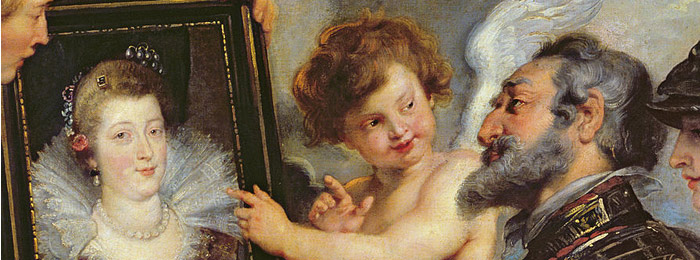
PETER PAUL RUBENS (1577-1640) With Rubens, we come to the last major transformation of the Oil Painting medium. The changes he brought about in the medium of the later Italians converted it into the most facile and versatile vehicle that any painter has ever had at his disposal. Technically, there seems to have been no limit to its possibilities and Rubens himself. No painter has ever enjoyed a greater or more lasting renown. During his life his atelier had a tremendous reputation, and from the time of his death until our own time, painters of all schools have tried to rediscover his lost secrets; they have copied him – from Antoine Watteau to Paul Cézanne in their efforts to learn…
Read More
On 24 Jun, 2015 With
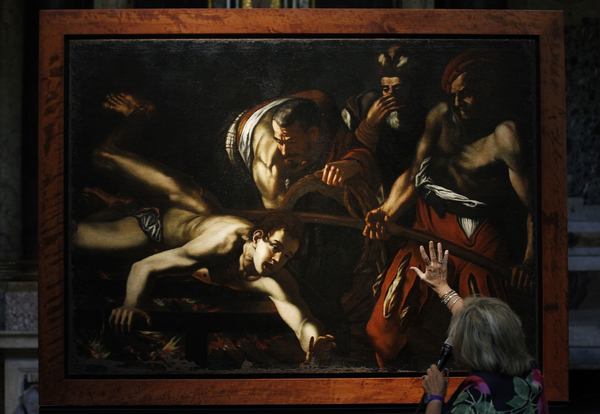
Article by Nicole Winfield The Vatican’s top art historian has shot down a report in its own newspaper that suggested a recently discovered painting was a Caravaggio. The head of the Vatican Museums, Antonio Paolucci, wrote in the Vatican newspaper L’Osservatore Romano that the work was most likely a copy of an original by a Caravaggio-influenced artist. L’Osservatore set the art world aflutter last week with a front-page article headlined A New Caravaggio detailing the artistry behind the Martyrdom of St. Lawrence, which had been discovered in the sacristy of a Jesuit church in Rome. The author of the article, art historian Lydia Salviucci Insolera, had made clear that she was not making any conclusions about the authenticity of the…
Read More
On 19 Jun, 2015 With
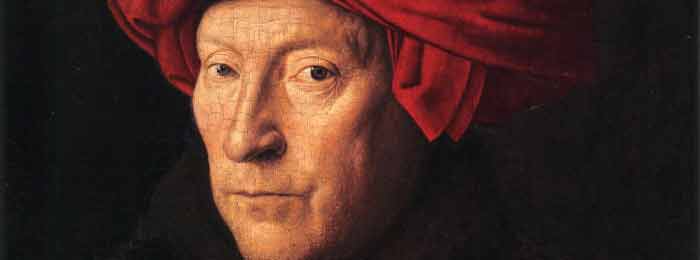
The Oil Painting Technique of Van Eyck With Van Eyck, painting entered a new era. His new technical methods and discovery of a more a pliable medium his colors immediately freed the artist of his time from many of the restraints imposed by the rigidity of the earlier mediums. Transparent glazes of Van Eyck’s oil painting technique allowed all the subtleties of the underlying layers of the painting to show through. This glazing produces the same phenomena as colored glass. A red glass, for instance, does not show the full intensity of its color except by the luminosity of the ground which shows through it. Placed on the earth it will appear dark. Similarly, the quality of the color of…
Read More
On 13 Apr, 2015 With
Venetian Painting Technique The Venetian painting technique was developed from many prior classical painting techniques, and is in effect a culmination of the methods that came before it. The approach to Venetian painting outlined below is a modified version that builds on the Renaissance method, incorporating modern chemicals and a contemporary palette. Venetian painting methods rose to prominence in the 17th century, and were used by painters like Titian, Caravaggio, and Velazquez. The most widespread use of these techniques was witnessed during the Baroque period, and they are ideal for still life painting, portraiture, and compositions that use strong, single-source lighting. The Technique– 1. The first step to creating this type of painting is a basic underdrawing which records the…
Read More
On 24 Feb, 2015 With
Ever since the knowledge of the great oil painting techniques of the Renaissance was so mysteriously lost, about the end of seventeenth century, artists have been trying vainly to rediscover the methods of such masters as Titian, Rubens, Rembrandt and Velasquez, as well as of their predecessors–Jan Van Eyck, Memling, Giovanni Bellini and others, though not allowing for the same facility of execution on a large scale, were nevertheless were nevertheless equally as brilliant and durable. It has been evident to every artist who has worked in the medium of oil paint for the last two centuries or more, that certain qualities of color and modelling and brilliance of surface which seem to have been the common Possession of earlier…
Read More
On 16 Jan, 2015 With
Tempera techniques possessed the great advantage of brilliance and permanence, but they were, at the same time, subject to serious difficulties of management which in many ways limited their possibilities. The so-called early primitive paintings executed in these various tempera mediums possessed a charm of their own, undoubtedly due in some measure to these very limitations of technique. The impossibility of achieving realistic effects and of producing the illusion of the third dimension preserved in them the flat decorative quality for which many are much admired. This decorative effect owes much of its power to the juxtaposition of large masses of color and form, similar to the effects obtained in some of the minor arts. One of the tempera artists’…
Read More