On 2 Aug, 2015 With
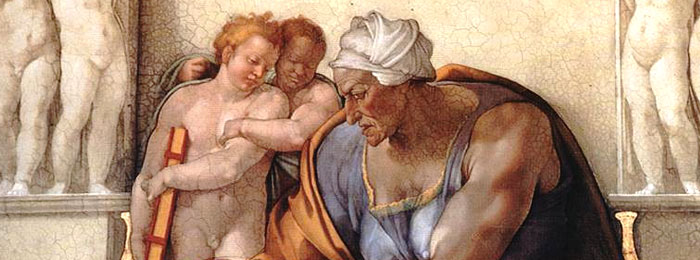
Interesting Facts about Michelangelo By Manali Oak Michelangelo was one of the greatest artists that Italy has ever produced. He is admired by the world for his works depicting his excellence in arts. Read on for some interesting facts about Michelangelo. Michelangelo was an Italian Renaissance painter, sculptor and architect. He was also a poet and an engineer. He made valuable contributions to each of the fields he worked in and remains being the best-documented artist of the 16th century. Let us look at some of the important and interesting facts about this great artist. Interesting Facts about Michelangelo Michelangelo was born on March 6, 1475 near Arezzo, Tuscany. His birth name was Michelangelo di Lodovico Buonarroti Simoni. He was brought…
Read More
On 1 Aug, 2015 With
Acrylic Paint or Oil Paint? Trying to decide which type of paint to use to paint your next art masterpiece? Should you go with the tried and true oil paints, or should you try the newer medium of acrylic paint? Each of these types of paints has their pros and cons which you should investigate so that you can choose the medium that suits your painting style. You are the artist, you make the call. Oil paint, the traditional medium, is basically powder pigments mixed with clear linseed oil. This paint is slow drying and for that reason is perfectly suited for blending colors together smoothly with plenty of time to contemplate the painting’s progress and still have time to…
Read More
On 30 Jul, 2015 With
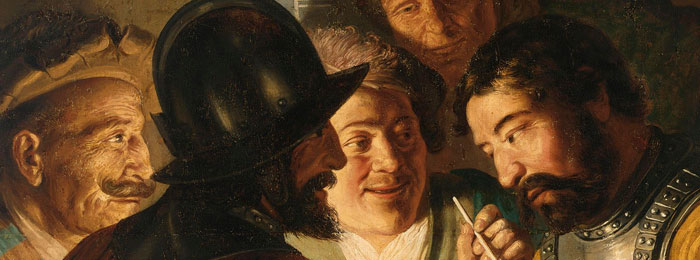
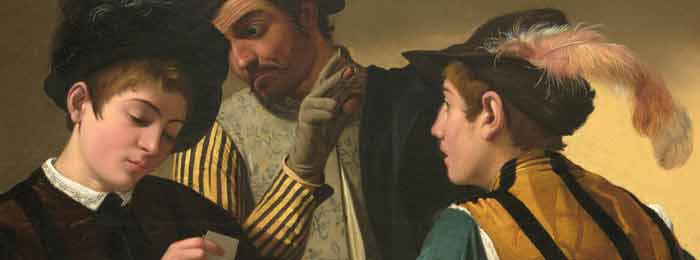
Portrait of young Rembrandt Leading scholar believes that the 16-year-old artist features in a Lievens painting By Martin Bailey AMSTERDAM. The earliest depiction of Rembrandt has been identified in a painting by his colleague, Jan Lievens. American art historian Dr Arthur Wheelock, of the National Gallery of Art in Washington, DC, says that Rembrandt is the central figure in The Cardplayers, 1623-24, when Rembrandt was aged 16. The painting, owned by a private collector, is currently on show in a Lievens exhibition at the Rembrandthuis in Amsterdam (until 9 August), following its presentation in Washington and Milwaukee. The picture was sold at Sotheby’s, Amsterdam, on 8 May 2007. Rembrandt and Lievens studied together in Amsterdam under Pieter Lastman. Dr Wheelock is…
Read More
On 26 Jul, 2015 With
TITIAN’S WORKS.Copies or Originals? The works of Titian, though many of his greatest productions have been destroyed by terrible conflagrations at Venice and Madrid, are numerous, scattered throughout Europe, in all the royal collections, and the most celebrated public galleries, particularly at Venice, Rome, Bologna, Milan, Florence, Vienna, Dresden, Paris, London, and Madrid. The most numerous are portraits, Madonnas, Magdalens, Bacchanals, Venuses, and other mythological subjects, some of which are extremely voluptuous. Two of his grandest and most celebrated works are the Last Supper in the Escurial, and Christ crowned with Thorns at Milan. It is said that the works of Titian, to be appreciated, should be seen at Venice or Madrid, as many claimed to be genuine elsewhere are…
Read More
On 24 Jul, 2015 With
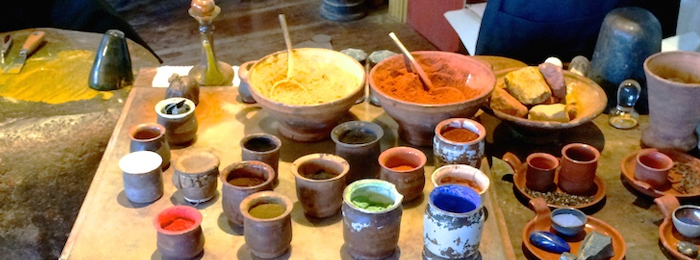
The Rembrandt Palette Rembrandt created his portraits with a small palette of colours dominated by dark earth tones and golden highlights. Remember the number of pigments available to the 17th century artist were miniscule when compared to those available to the modern artist. Rembrandt was unusual in that he used around hundred, but less than 20 pigments have been detected in Vermeer’s oeuvre. Portraits by Rembrandt have a special quality- the brilliant use of light to illumine faces, jewels and rich fabrics; the effective use of a limited palette, and the rich, dark, transparent backgrounds all set off the subjects of his portraiture in a way never seen before and often imitated afterwards. It has been said that a painter has…
Read More
On 21 Jul, 2015 With
Caravaggio’s painting technique: Using all of the technical and art historical information we now have on the paintings that can be firmly attributed to Caravaggio we can summarize his technical practices as follows: 1) Preference for using a linen canvas support mounted on a wooden strainer. 2) Preference for dark red-brown ground, often left visible, and used as mid-tones. 3) Use of dramatic, single-source lighting. 4) Use of incisions done free-hand in the still moist ground to establish the composition and fix the pose of his models. 5) Did not use preliminary sketches but began by loosely drawing the outline of forms in dark paint and locating major highlights in lead white (abozzo). 6) Used limited palette, primarily earth colors,…
Read More
On 18 Jul, 2015 With
Glazing Painting Techniques So, here I’ll give you way too much information on glazing (or indirect painting). But you can pick out what you need and forget the rest. It’ll be right here if you ever change your mind. Here’s the first rule (yes, in art rules are for breaking, but you have to understand the rule before you can break it most effectively) Fat Over Lean All mediums are fat, all opaque pigments without medium are lean. You want to paint opaquely first, with little or no medium. In subsequent layers you can move to using more medium because the oil will soak through to the first layer. Also, you don’t want the under layer to dry slower than…
Read More
On 18 Jul, 2015 With
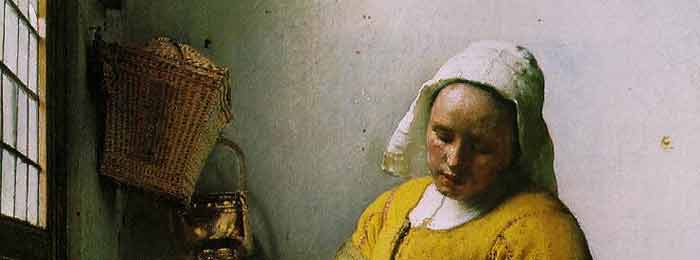
Oil paintings techniques: Vermeer’s Palette Johannes Vermeer was a Dutch painter who specialized in domestic interior scenes of middle-class life. Vermeer was a moderately successful provincial genre painter in his lifetime. He seems never to have been particularly wealthy, leaving his wife and children in debt at his death, perhaps because he produced relatively few paintings. One aspect of his meticulous painting technique was Vermeer’s choice of pigments. He is best known for his frequent use of the very expensive ultramarine (The Milkmaid), and also lead-tin-yellow (A Lady Writing a Letter), madder lake (Christ in the House of Martha and Mary), and vermilion. He also painted with ochres, bone black and azurite. The claim that he utilized indian yellow in Woman Holding…
Read More
On 15 Jul, 2015 With
Artworks by Donald Fowler
I have learned more in this online course than I could ever imagine.
This course went above and beyond what I expected from it, I couldn’t be happier.
I look at the old master paintings with a new perspective and understanding thanks to this course…
Read More
On 14 Jul, 2015 With
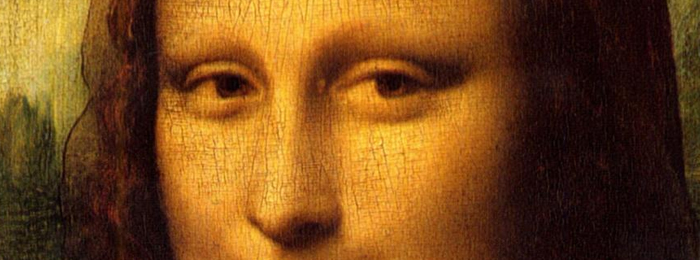
Vitruvian Man Helps Decode the Mona Lisa The Yin and Yang qualities of the two cojoined forms of the Vitruvian Man and those of the Mona Lisa (both considered to be self portraits of Leonardo Da Vinci)help us to experience our own wholeness. This leads to greater peace and happiness. These Yin and Yang qualities are also found in the Star of David and Christian Cross. Leonardo said it best: “The outstretched arms and legs of a man form a square and a circle: the square symbolizes the solid physical world and the circle the spiritual and eternal. Man bridges the gap between these two worlds.” -Leonardo Da Vinci, “The Magical Proportions of Man” Leonardo Da Vinci’s Vitruvian Man (the…
Read More