On 24 Jul, 2011 With
In this video lesson you will discover how to create very effective artworks with minimal means. Good quality paper is essential for this kind of artwork. Ideally, paper should be strong enough to take a sharp graphite pencil and it should also be eraser resistant. You can search your art supplies shop for paper that is suitable for drawing, in the required size. Don’t be tempted to replace drawing paper with watercolour or sketching paper, even if you like the surface texture. Watercolour paper is not as resistant to a rubber eraser as smooth drawing paper is. We have chosen a 42x 59 cm sheet of paper for a reason. A portrait of the character with a face measuring 9…
Read More
On 14 Jul, 2011 With
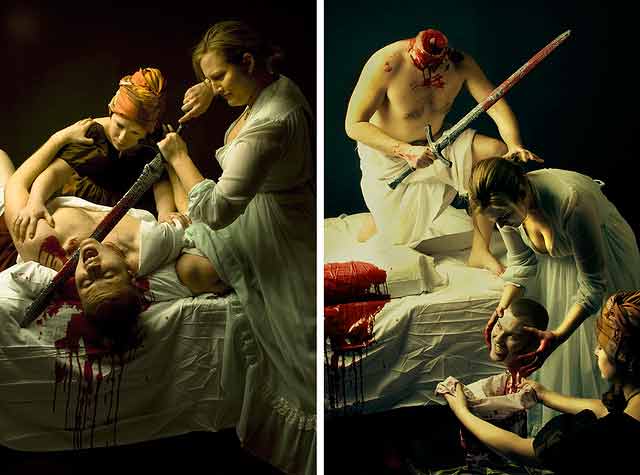
Modern interpretation of Caravaggio’s “Judith Beheading Holofernes” Caravaggio’s Oil Painting Technique – Learn from the OLD MASTERS
Read More
On 11 Jul, 2011 With
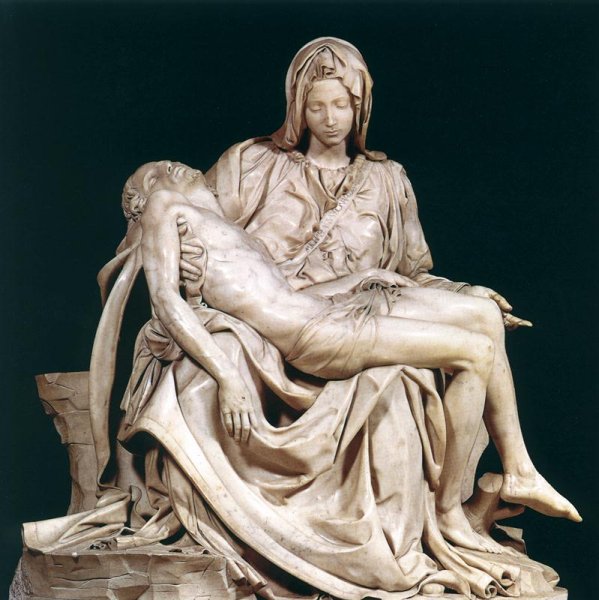
Learn from the OLD MASTERS The Pietà (pl. same; Italian for pity) is a subject in Christian art depicting the Virgin Mary cradling the dead body of Jesus, most often found in sculpture. As such, it is a particular form of the Lamentation of Christ, a scene from the Passion of Christ found in cycles of the Life of Christ. When Christ and the Virgin are surrounded by other figures from the New Testament, the subject is strictly called a Lamentation in English, although Pietà is often used for this as well, and is the normal term in Italian
Read More
On 10 Jul, 2011 With
Learn from the OLD MASTERS The Ambassadors (1533) is a painting by Hans Holbein the Younger in the National Gallery, London. As well as being a double portrait, the painting contains a still life of several meticulously rendered objects, the meaning of which is the cause of much debate. It is also a much-cited example of anamorphosis in painting. The most notable and famous of Holbein’s symbols in the work, is the skewed skull which is placed in the bottom centre of the composition. The skull, rendered in anamorphic perspective, another invention of the Early Renaissance, is meant to be a visual puzzle as the viewer must approach the painting nearly from the side to see the form morph into…
Read More
On 7 Jul, 2011 With
What they learned from the OLD MASTERS? From Raphael. The Portrait of a Young Woman (also known as La fornarina) is a painting by the Italian High Renaissance master Raphael It is probable that the picture was in the painter’s studio at his death in 1520, and that it was modified and then sold by his assistant Giulio Romano. The woman is traditionally identified with the fornarina (bakeress) Margherita Luti, Raphael’s Roman mistress, though this has been questioned. The woman is pictured with an oriental style hat and bare breasts. She is making the gesture to cover her left breast, or to turn it with her hand, and is illuminated by a strong artificial light coming from the external. Her…
Read More
On 4 Jul, 2011 With
What Édouard Manet learned from the OLD MASTERS? Manet’s composition reveals his study of the old masters, as the disposition of the main figures is derived from Marcantonio Raimondi’s engraving The Judgement of Paris (c. 1515) after a drawing by Raphael. Scholars also cite two works as important precedents for Manet’s painting Le déjeuner sur l’herbe, The Pastoral Concert, 1508, by Giorgione or possibly Titian (in the Louvre) and Giorgione’s The Tempest, both of which are famous Renaissance paintings. The Tempest also features a fully dressed man and a nude woman in a rural setting, as an important precedent for Manet’s painting Le déjeuner sur l’herbe. The painting Pastoral Concert, even more closely resembles Le déjeuner sur l’herbe, featuring two…
Read More
On 27 Jun, 2011 With
Art inspired by Michelangelo’s David How to create artworks in style of the Old Masters
Read More
On 22 Jun, 2011 With
Art inspired by Michelangelo
Read More
On 17 Jun, 2011 With
Paintings imitaded Leonardo da Vinci style.
Read More
On 13 Jun, 2011 With
Oil Painting Methods – Oil paintings based on The Last Supper Leonardo da Vinci
Read More