On 12 May, 2011 With
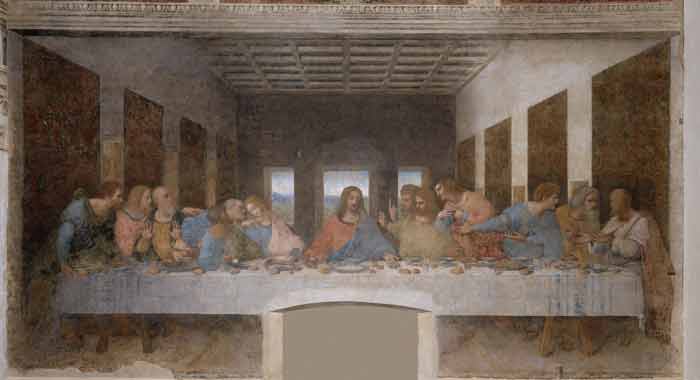
Leonardo da Vinci’s Oil Painting Technique – How to paint like the Old Masters. The Last Supper (Italian: Il Cenacolo or L’Ultima Cena) is a 15th century mural painting in Milan created by Leonardo da Vinci for his patron Duke Ludovico Sforza and his duchess Beatrice d’Este. It represents the scene of The Last Supper from the final days of Jesus as narrated in the Gospel of John 13:21, when Jesus announces that one of his Twelve Apostles would betray him. Leonardo da Vinci’s Oil Painting Technique: Leonardo da Vinci painted The Last Supper on a dry wall rather than on wet plaster, so it is not a true fresco. Because a fresco cannot be modified as the artist works,…
Read More
On 12 May, 2011 With
New Website Reveals Almost Forgotten Techniques of Classical Oil Painting and Drawing A new Internet-based resource about classical oil painting and drawing techniques has just been released by the Web Art Academy. The Academy (http://webartacademy.com) presents fine art video lessons for art students and enthusiasts wishing to improve their creative skills. London, UK. A new website specifically created for the fine art education market has just been launched after more than two years of course development and preparation. The Web Art Academy is designed to help people easily acquire excellent oil painting and drawing skills and improve their chances of becoming successful and famous fine artists. Natalie Richy and Vladimir London, founders of the Web Art Academy, established the online…
Read More
On 10 May, 2011 With
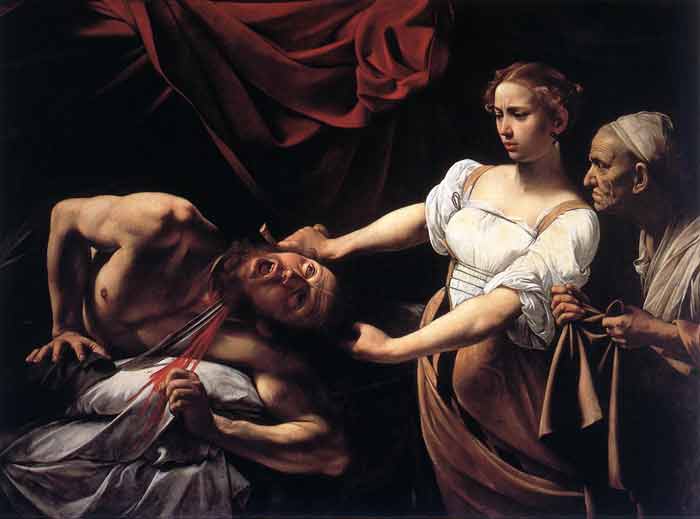
Caravaggio’s Oil Painting Technique Carravgio for the most part painted alla prima without any prepatory drawings or cartoons directly onto the canvas. The evidence for this is that over time the underpaintings have become more visable and show how he changed his mind and “searched” for him composition. He used a very limited pallet. David Hockney’s theory on masters using primitive projectors, pointed to Caravaggio’s marks on the wall (in “Judith Beheading Holofernes”) as proof to this for some reason. Its important to know that Hockney is the “conspiracy nut” of the art world who sees logic where there is none and speaks absurdly. Other than that, I have not come across anything as to why there are scratches in…
Read More
On 6 May, 2011 With
What they learned from the OLD MASTERS? Michelangelo
Read More
On 5 May, 2011 With
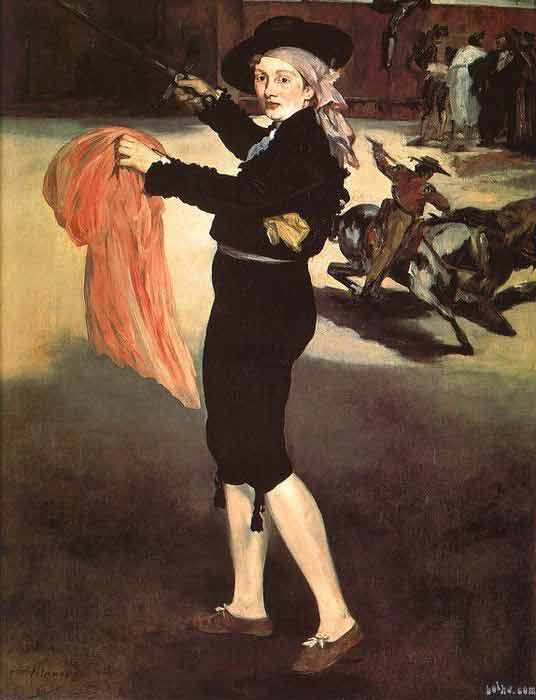
Manet’s Oil Painting Technique Manet’s Oil Painting Technique technique was not, in fact, radically innovative, but the context in which it was presented challenged established tradition. Manet responded to Couture’s attitude to rapid execution and to the ebauche, because it permitted an immediate response to the idea, the image growing under the brush and the immediate rendering of a moment of contemporary life. Whereas Couture would present in public only “finished” paintings, in which the initial statement had been modified, Manet. was prepared to regard ebauche methods as yielding the finished statement. Thus, although he manipulated his paint surface, each layer was executed in alla-prima technique, and retained a fluid and personalised painterly appearance. Manet favoured the use of opaque…
Read More
On 7 Mar, 2011 With
Vermeer’s painting technique: Underpainting After the initial outline drawing was completed Vermeer began the underpainting, one of the most important stages in his working procedure. Without a thorough knowledge and mastery of the underpainting technique, many of the artist’s complex compositions, accurate depiction of light and chromatic subtleties could not have been easily achieved. Underpainting, or “dead color” as it was called in Vermeer’s time, is rarely practiced today. For the last century, most artists have simply begun painting directly on the canvas with full color surpassing the underpainting stage entirely. Therefore, neither the function or the practice of underpainting is well understood. In its simplest terms, underpainting is a monochrome version of the final painting which fixes the composition, gives…
Read More
On 4 Mar, 2011 With
Art Terms: Trompe-l’œil Trompe-l’œil, which can also be spelled without the hyphen in English as trompe l’oeil, French for ‘deceive the eye’ is an art technique involving extremely realistic imagery in order to create the optical illusion that the depicted objects appear in three dimensions. History in painting Although the phrase has its origin in the Baroque period, when it refers to perspectival illusionism, use of trompe-l’œil dates back much further. It was (and is) often employed in murals. Instances from Greek and Roman times are known, for instance in Pompeii. A typical trompe-l’œil mural might depict a window, door, or hallway, intended to suggest a larger room. A version of an oft-told ancient Greek story concerns a contest between…
Read More
On 2 Mar, 2011 With
Art Jokes: Cezanne and the laws of perspective
Read More
On 26 Feb, 2011 With
The Death of Marat by Jacques-Louis David The Death of Marat (French: La Mort de Marat ) is a 1793 painting in the Neoclassic style by Jacques-Louis David, it is one of the most famous images of the French Revolution. This work refers to the assassination of radical journalist Jean-Paul Marat, killed on the 13th of July 1793 by Charlotte Corday, a French Revolutionary figure from a minor aristocratic family. Corday, who blamed Marat for the September Massacres and feared an all out civil war, claimed “I killed one man to save 100,000.” La Mort de Marat Jacques – Louis David and a quote by fashion photographer Eugenio Recuenco Jean-Paul Marat (24 May 1743 – 13 July 1793), was a…
Read More
On 24 Feb, 2011 With
Gabrielle d’Estrées, mistress of King Henry IV of France and quotes by different artistes The painting Gabrielle d’Estrées et une de ses soeurs by an unknown artist (c.1594), is of Gabrielle d’Estrées, mistress of King Henry IV of France, sitting up nude in a bath, holding (assumedly) Henry’s coronation ring, whilst her sister sits nude beside her and pinches her right nipple. Henry gave Gabrielle the ring as a token of his love shortly before she died. The painting is a symbolic announcement anticipating the birth of Gabrielle’s first child with Henry IV, César de Bourbon. Her maternity is expressed in three ways: her sister pinches the source of the new mother’s milk, the servant in the background knits in…
Read More