On 28 Nov, 2011 With
Léon Bonnat’s Palette Prussian blue Cremnitz white Naples yellow Yellow ochre Light red Vermilion Alizarin crimson Burnt sienna Ivory black Bitumen (Bonnat only used this color for glazing) Bonnat’s medium: 1 part Courtai siccative and 1 part turpentine. Bonnat used this medium in the shadows only. Support: White oil ground
Read More
On 26 Nov, 2011 With
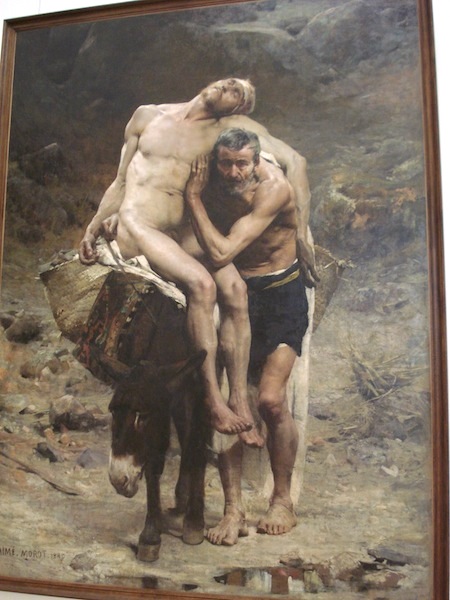
Aimé Morot’s Palette Aimé Morot (1850–1913) was a French painter. Morot was born in Nancy, where he studied under a drawing master named Thierry. He later attended the atelier of Alexandre Cabanel in the Ecole des Beaux-Arts in Paris, but left after only two weeks to continue his studies independently. During this period he spent much of his time studying animals in the Jardin des plantes, and was later to become famous for his paintings of horses, lions and bulls. Despite his lack of attendance at the École, he won the Prix de Rome in 1873. The subject given that year was the Babylonian Captivity. The prize-winning painting is currently in the collection of the École des beaux-arts in Paris, and can be viewed on request. Morot married the daughter of Jean-Léon Gérôme….
Read More
On 22 Nov, 2011 With
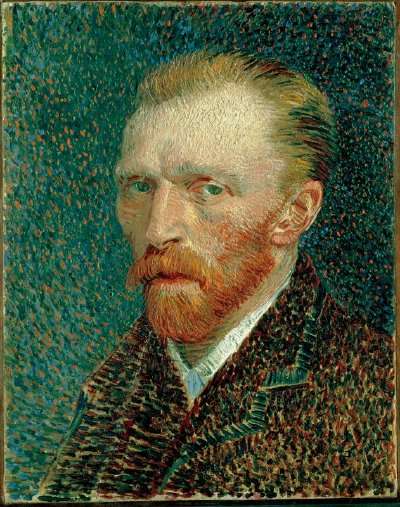
Vincent van Gogh’s Palette Yellow ocher Chrome yellow Cadmium yellow Chrome orange Vermilion Prussian blue Ultramarine Lead white Zzinc white Emerald green Red lake Red ocher Raw sienna Black
Read More
On 20 Nov, 2011 With
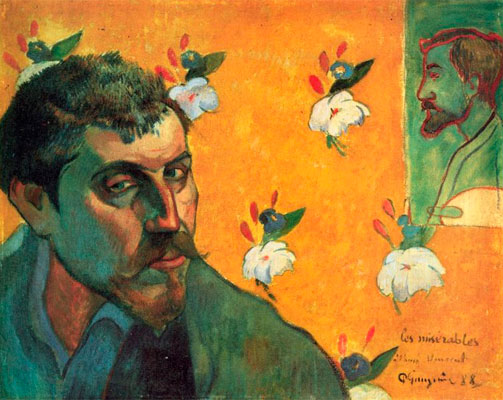
Paul Gauguin’s Palette Paul Gauguin was a leading Post-Impressionist artist, painter, sculptor, printmaker, ceramist and writer. Prussian blue Cobalt blue Emerald green Viridian Cadmium yellow Chrome yellow Red ochre Cobalt violet Lead white Zinc white
Read More
On 17 Nov, 2011 With
Whistler’s Palette James Whistler was an American-born, British-based artist. Lemon Yellow Cadmium Yellow Yellow Ochre Raw Sienna Raw Umber Burnt Sienna Vermilion Venetian Red or Indian Red Rose Madder Cobalt Blue Antwerp Blue (a weak pigment inferior to Prussian Blue) Flake White Ivory Black
Read More
On 16 Nov, 2011 With
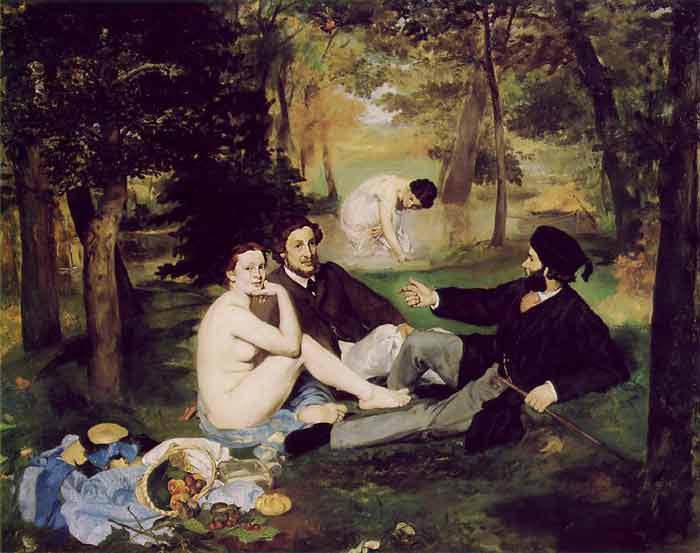
Clothed male, naked female in Art Clothed male, naked (or nude) female (on the internet sometimes abbreviated to CMNF) is a genre of erotica featuring one or more nude women and one or more clothed men. Such a scenario is described as a sexual fantasy by some men and some women. A common (but not essential) feature of such fantasy scenarios is that the woman’s one-sided nudity portrays the woman’s sense of vulnerability and humiliation in relation to the clothed man. One-sided female nudity can occur in actuality when a woman disrobes for the sexual pleasure of a man or other men, such as in a BDSM, sexual roleplay or other sexual activity, as an indication of sexual submission. Some…
Read More
On 3 Nov, 2011 With
Gérôme’s Palette Jean-Léon Gérôme was a French painter and sculptor in the style now known as Academicism. Lead white Cadmium yellow Yellow ochre Mars yellow Vermilion Light red Burnt sienna Rose madder Purple lake (laque pourpre) Emerald green Mineral blue* Cobalt blue light Ivory black *According to Vibert (La science de la peinture, p. 288), mineral blue (bleu minéral) is a pigment with the same chemical composition as Prussian blue.
Read More
On 19 Oct, 2011 With
Van Gogh’s palette Why preserve an artist’s palette? The daubs of raw pigment or the mixes left in position can be an intriguing index to the working method and the mind of the artist. And most, once the status of art had been elevated above the realms of mere craft, would paint themselves palette in hand. Where and how colour is laid can convey emotion, psychology, religious significance. “The whole value of what you are about” wrote John Ruskin in his Elements of Drawing, first published in 1857 “depends on colour. If the colour is wrong, everything is wrong: just as, if you are singing, and sing false notes, it does not matter how true your words are.” In a letter to…
Read More
On 17 Oct, 2011 With
Techniques of printmaking (etching) as a fine art Etching is part of the intaglio family (along with engraving, drypoint, mezzotint, and aquatint.) The process is believed to have been invented by Daniel Hopfer (circa 1470-1536) of Augsburg, Germany, who decorated armour in this way, and applied the method to printmaking. Etching soon came to challenge engraving as the most popular printmaking medium. Its great advantage was that, unlike engraving which requires special skill in metalworking, etching is relatively easy to learn for an artist trained in drawing. Etching prints are generally linear and often contain fine detail and contours. Lines can vary from smooth to sketchy. An etching is opposite of a woodcut in that the raised portions of an…
Read More
On 9 Sep, 2011 With
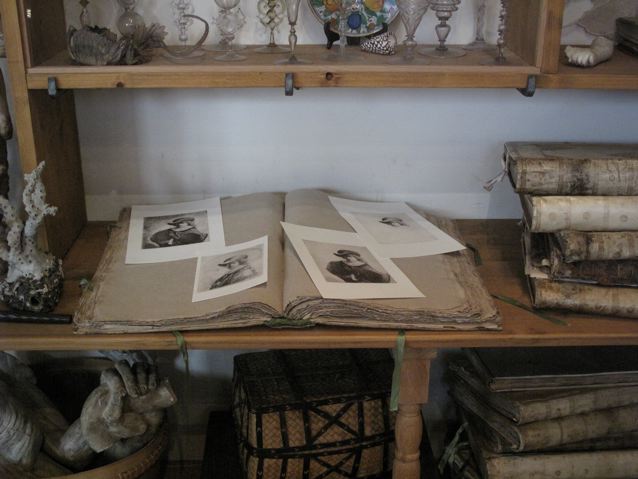
The former residence of Dutch painter Rembrandt van Rijn has been restored to its former glory; the way it was when Rembrandt lived here in the 17th century. Everything’s there: his studio, his living quarters and his art. You’ll most definitely be surprised by his curiosity cabinet. When Rembrandt filed bankruptcy in 1656 an inventory was made and his valuable possessions were sold. Thankfully the list with Rembrandt’s inventory was saved and that’s how you can get a representative glimpse on Rembrandt’s life today. Besides the rooms of the house, the Rembrandt House Museum shows: Paintings by Rembrandt’s contemporaries, his pupils and his teacher ‘Pieter Lastman’. Rembrandt’s graphical work: The museum harbors a large collection of 260 Rembrandt etchings (in…
Read More