On 19 Nov, 2010 With
Neo-conceptual art Neo-conceptual art describes art practices in the 1980s and particularly 1990s to date that derive from the conceptual art movement of the 1960s and 1970s. These subsequent initiatives have included the Moscow Conceptualists, United States neo-conceptualists such as Cindy Sherman and the Young British Artists, notably Damien Hirst and Tracey Emin in the United Kingdom, where there is also a Stuckism counter-movement and criticism from the 1970s conceptual art group Art and Language. History Many of the concerns of the “conceptual art” movement proper have been taken up by many contemporary artists since the initial wave of conceptual artists. While many of these artists may not term themselves “conceptual artists”, ideas such as anti-commodification, social and/or political critique, digital art, and ideas/information as medium continue to be aspects…
Read More
On 18 Nov, 2010 With
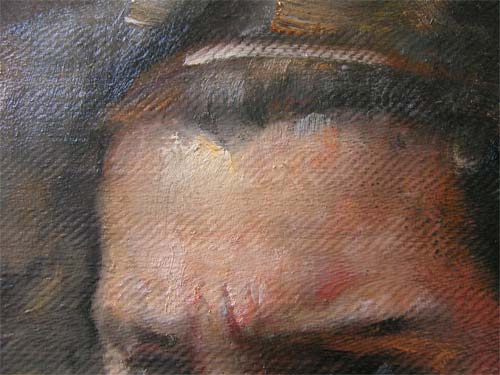
Previous articles about Odd Nerdrum’s Oil Painting Methods: Part 1 Part2 OTHER PAINTING METHODS of ODD Nerdrum He started with a rough outline of the head and went straight to painting shadows, no hard edges in the beginning. During a break on the first day, he used a fan brush to soften the entire face. He turned the painting upside down a couple of times to see where the problem lies. At the beginning of the second day, before starting to paint, he applied a thin layer of linseed oil on the whole surface with the rag (oiling out) he then added green umber to the rag and applied that on the background. (no extra oil, except for the little…
Read More
On 17 Nov, 2010 With
Was John Singer Sargent a homosexual? It has been suggested by art historian Trevor J. Fairbrother that the gentle eroticism of Sargent’s male nudes is evidence of his homosexual tendencies. This beautiful portrait of the 28 year old dandy W. Graham Robertson from 1894 has been much discussed as an example of an homoerotic aesthetic in Sargent’s portraits of elegant young gentlemen. Sargent was much sought after as a portrait painter among the elite of society because he made men look dashing and women look beautiful. The sensual beauty of his portraits of both men and women caused some comment. Some even called his portraits indecent. Because of it’s depiction of an apparently sexually liberated woman in a low cut…
Read More
On 16 Nov, 2010 With
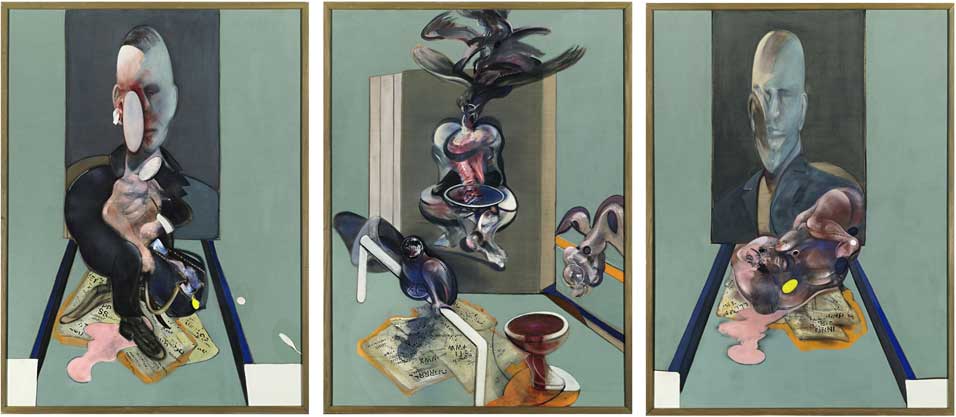
The most expensive contemporary art painting ever sold 2008: The most expensive contemporary art painting ever sold at auction: Triptych (1976) by Francis Bacon. Sold for $86.3 million.
Read More
On 14 Nov, 2010 With
A judge ruled Tuesday that a Picasso painting can be sold at auction, despite a claim that its former owner was forced by the Nazis to sell it in the 1930s because his family descended from Jews. U.S. District Judge Jed S. Rakoff issued the order four days after Julius H. Schoeps, an heir to Berlin banker Paul von Mendelssohn-Bartholdy, filed a lawsuit in Manhattan to stop the sale. The judge had temporarily blocked the auction of “Portrait de Angel Fernandez de Soto”. The painting, expected to fetch up to $60 million, was scheduled to be sold at Christie’s “Portrait de Angel Fernandez de Soto” on Wednesday. The painting of de Soto, who shared a studio with Pablo Picasso, is being…
Read More
On 12 Nov, 2010 With
Click here to download The Must-have Guide for Successful Fine Artist This Book can give You only two things: FAME and WEALTH Odd Nerdrum Preparation (his student demoed it in class): size the canvas with rabbit skin glue. (PVA glue can be used as a substitute). Priming the canvas: Materials -Framer’s Whiting (ground chalk) -Linseed Oil?-Galkyd (just a little bit, to speed up drying time) -Turpentine (just a litte bit; and do not use OMS) mix with a thick long palette knife until the mix is the consistency of toothpaste. (it was more like pancake batter) add white and English Red (or transparent oxide red) so that the final mix is a pinkish brick color. Make sure the canvas is…
Read More
On 12 Nov, 2010 With
Natalie Richy’s Fine Art Exhibition
Read More
On 11 Nov, 2010 With
While Fuseli was laboring on his celebrated “Milton Gallery,” he was frequently embarrassed by pecuniary difficulties. From these he was relieved by a steadfast friend—Mr. Coutts—who aided him while in Rome, and forsook him not in any of his after difficulties. The grateful painter once waited on the banker, and said, “I have finished the best of all my works—the Lazar House—when shall I send it home?” “My friend,” said Mr. Coutts, “for me to take this picture would be a fraud upon you and upon the world. I have no place in which it could be fitly seen. Sell it to some one who has a gallery—your kind offer of it is sufficient for me, and makes all matters…
Read More
On 10 Nov, 2010 With
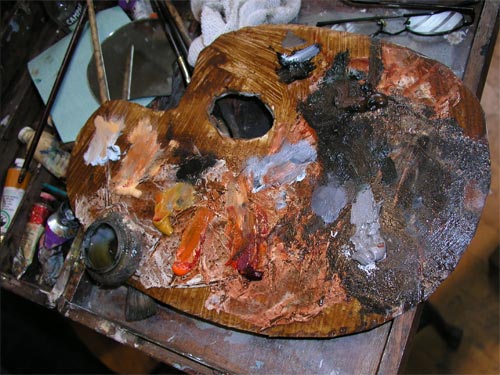
Odd Nerdrum uses a small (less than 12″ on the longest side) homemade oval shaped palette cut out from foamcore. It is tinted brown. COLORS on the palette: (Old Holland brand) -Titanium White w/ a tint of Old Holland Blue (which he pre-mixed into a tube) -Briliant Yellow Light -Yellow Brown -Madder (Crimson) Lake Deep Extra -Brown Ochre (Deep?) -Green Umber?-Warm Grey (which he pre-mixed from Ti White/ Brown Ochre/ Green Umber) -Mars Black (warmer and less harsh than Ivory Black) -Scheveningen Orange? (I think that’s what he used. but I was surprised because I thought this color is fugitive)
Read More
On 9 Nov, 2010 With
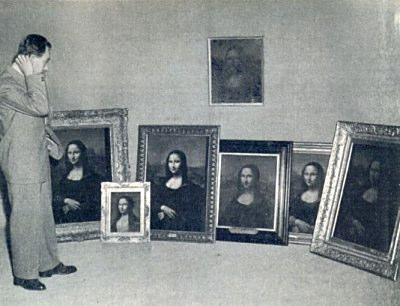
Confronting the Issue of Fake Art (original version of a story I wrote for Mumbai Mirror, which was cut down to 400 words, but I will complain about that some other day) Buyer Beware How to avoid becoming a victim of art fraud by Amitabh Nanda The next time you’re approached about a fantastic investment in an Indian work of art, BEWARE, because it is more than possible that you are buying a fake. According to an alarming estimate made by Thomas Hoving, former director of the Metropolitan Museum of Art, up to 40% of all the works in circulation globally are really forgeries, and in the last few years, a massive number of fakes have seeped into the local art…
Read More